A top cop feared by drug traffickers to be Honduras' new security minister
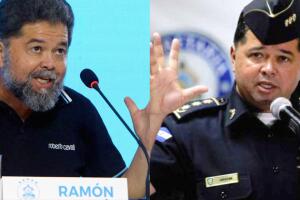
Former national police chief Gen Ramon Sabillon made a name for himself by capturing several of the country's biggest drug traffickers. He ended up being fired by President Juan Orlando Hernández. (Leer en español)
January 27, 2022 09:53 AM
January 27, 2022 11:18 AM
Five years after he fled Honduras under threat, former national police chief Ramón Sabillon was nominated Thursday as the country’s new Minister of Security by President-elect Xiomara Castro.
The nomination comes hours before Castro is due to to sworn in as Honduras' first female president and only a few weeks after Sabillon returned from exile in the United States, kneeling down to symbolically touch the ground outside the San Pedro Sula airport where he received a hero’s welcome.
“I left with a backpack on my back and with only the hope to live,” said Sabillon, at the airport on January 2 amid a crowd of supporters.
“Now we have a woman (president) who lived the same experience,” he added, referring to when Castro’s family was exiled following the 2009 coup that ousted her husband, former president Manuel 'Mel' Zelaya.
During his time as national police chief, Sabillon made a name for himself by capturing several of the country’s biggest drug traffickers – results that he says got him fired by President Juan Orlando Hernández.
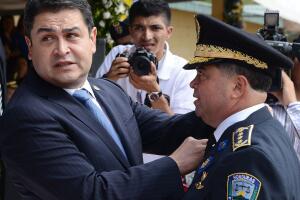
ORLANDO SIERRA/AFP via Getty Images
Honduran President Juan Orlando Hernandez (L) decorates National Police Director Ramon Sabillon in Tegucigalpa during the National Police Day on June 09, 2014.
In an ironic twist of fate, one of Sabillon’s first tasks as minister could be to coordinate the capture of Hernández, who is widely expected to be indicted on drug trafficking charges by U.S. prosecutors upon leaving office January 27.
U.S. cooperation
The nomination of Sabillon is seen as a nod to the importance of cooperation between Honduras and the United States on security issues. "Xiomara Castro won't be able to find a better man than Sabillon,” said former DEA agent Mike Vigil. “He's a decent, honest man who been trying to do what's best for Honduras. She is going to need people like him to clean up the country. And he will help rebuild confidence with the US and bring financial assistance.”
As a sign of approval for the changes in Honduras, Vice president Kamala Harris is due to lead a high level U.S. delegation for Castro's inauguration on Thursday.
Sabillon was appointed as head of the national police in December 2013, replacing the controversial Juan Carlos 'El Tigre' Bonilla, who was not trusted by U.S. agencies at the time and has since been indicted on drug trafficking and related weapons charges by U.S. prosecutors.
The mistrust of Bonilla had stalled efforts to capture drug traffickers wanted for extradition to the U.S., former U.S. and Honduran anti-narcotics officers told Univision. “Contrast [Sabillon] with Bonilla, and it was night and day,” said a former DEA agent familiar with investigations in Honduras. Whereas Bonilla had attempted to meddle in the work of anti-narcotics officers, Sabillon left them to do their jobs and provided support when it was requested.
Over the next year, the first seven drug traffickers were captured for extradition, including major targets such as Hector 'Don H' Fernandez and Miguel Arnulfo and Luis Valle Valle. The capture of the latter two, who were the biggest drug traffickers in the country, rattled President Hernández and ultimately led to Sabillon being fired two months later in December 2014.
Drug czar murdered
In 2016, several media outlets published supposed internal police documents related to the 2009 assassination of former Honduran anti-drug czar Julián Arístides González. The documents implicated a slew of police officials in the murder. Sabillon was not implicated in the murder, but of attempting to essentially shelve the investigation. He denounced the documents as false and said that it was an attempt to tarnish his reputation by the government.
The documents have since come under greater scrutiny and are now widely believed to have been manipulated for political purposes. “I have no faith or confidence in the veracity of those documents or at least in the authenticity of their original text,” said Victor Meza, director of the watchdog CEDOH who served as coordinator of a police reform commission between 2012 and 2014.
“Many of the texts of those documents have been altered, have been manipulated or have been modified according to the interests of each police chief who arrived," he added.
Soon after, Sabillon revealed that when he spoke with the Valle Valle brothers after their capture, they said that it was political because the government didn’t go after the drug traffickers aligned with the ruling National Party, including Alexander Ardon and Juan Antonio “Tony” Hernández, a brother of President Hernández and legislator at the time.
Time proved that it was true. In October 2019, Tony Hernández was convicted of drug trafficking and related weapons charges in a New York federal court. During the trial, prosecutors outlined what they called “state-sponsored drug trafficking,” which depended upon protection from President Hernández, who was named as an unindicted co-conspirator in the case. One of the key witnesses was Ardon, who turned himself into U.S. authorities in March 2019 and has pleaded guilty to drug trafficking.
As a result of the allegations made by Sabillon, he said he began to receive threats and accused the Honduran government of reducing the security detail he was entitled to as former head of the national police. Conscious of what had happened to Aristides and others who had spoke out against the country’s powerful drug traffickers, Sabillon made the decision to flee.
"I felt very sorry for General Sabillon,” said Mike Vigil. “He tried to bring to public attention the corruption and drug trafficking that was taking place under Hernández and he finds himself being the target of the government.”
Five years later, the election of Xiomara Castro signaled the end of a dozen years of National Party rule, opening the door for Sabillon to return to Honduras, greyed, bearded and vindicated.
In photos: Tony Hernandez and the drug war in Honduras
Tony La Prensa
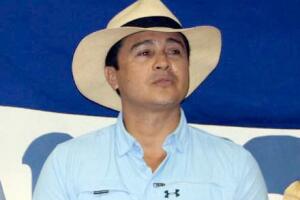
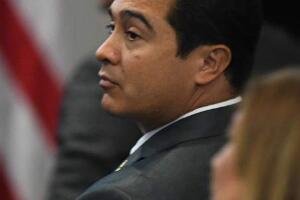
Tony Hernandez in an archive photo.
Courtesy of La Prensa
Tony's cocaine (Eng).JPG
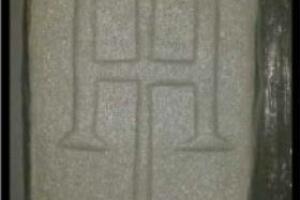
Some of the evidence against Hernandez includes weapons and cocaine stamped with his initials, 'TH.'
Court records.
Tony's Scorpion gun
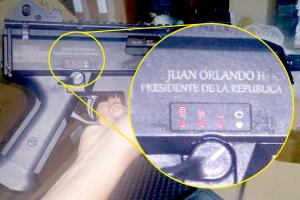
Trial exhibit #203-R4 in Tony Hernandez drug trafficking case in New York: a weapon allegedly carried by the president's brother, embossed with Honduran flag and name of his brother, president Juan Orlando Hernandez, according to prosecutors. “This picture from the defendant’s phone is the embodiment of state-sponsored drug trafficking," said U.S. Assistant Attorney, Emil Bove.
Southern Distirct of New York/David Maris/Univision
Tony's guns (Eng)
Some of the evidence against Hernandez includes these weapons and cocaine stamped with his initials, 'TH.'
Court records
Honduras drug laboratory (Eng)
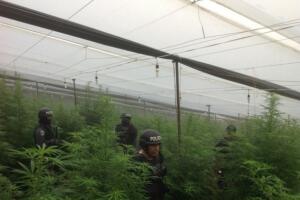
On January 31, 2014, a drug laboratory was raided in the small mountainous village of Iguala in the western province of Lempira. A special police investigation unit arrested two Colombians, seized several weapons and 6,000 marijuana and heroin plants. Two months later, Colombians were released.
Courtesy of the Honduran National Police.
OsorioIMG_2544.JPG
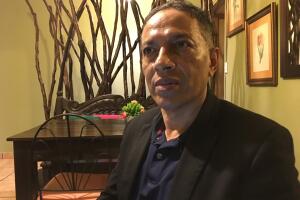
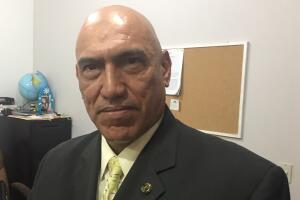
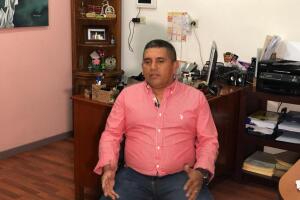
General Leandro Osorio, 55, was head of the special investigations unit of the Honduran police (DNIC) from 2012-2015.
David Adams / Univision
Tony Hernandez (Eng)
Juan Antonio 'Tony' Hernandez (Archive photo)
AP
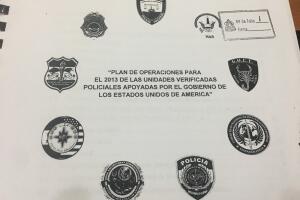
US Honduran plan 2013
In 2012, the United States and Honduras created special units to combat kidnapping and extortion, as well as a Special Tactical Operations Group (GOET) backed by the FBI with sophisticated eavesdropping technology to listen to phone calls. They prepared an action plan, entitled: "Operational Plan for 2013 of verified police units supported by the government of the United States of America."
Univision
Gen Bonilla (Eng)
The former head of the Honduran National Police, General Juan Carlos Bonilla, during an interview with Univision in 2019.
David Adams / Univision
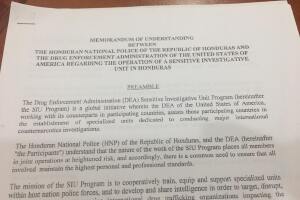
DEA memo (Eng)
On October 8, 2012, the United States and Honduras signed a secret agreement to create 'Sensitive Investigative Unit" program', or SIU in Honduras. The program allows the DEA to vet and train local police and military personnel for use in operations focused on drug traffickers and cartels.
Univision
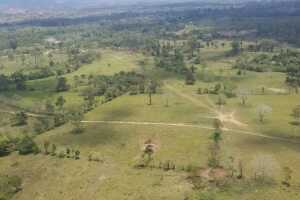
Clandestine airstrip in Mosquitia, Honduras
A clandestine airstrip used by drug traffickers in the department of Gracias a Dios, in eastern Honduras.
FUSINA (National Interagency Security Force)
Tony's helicopter.PNG
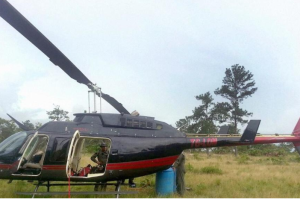
An alleged drug trafficking helicopter seized in the Mosquitia region of Honduras in 2014.
Univision Investiga
Santos Honduras
Former Honduran army captain, Santos Rodríguez Orellana, participated in the anti-drug missions. He was suspended from the armed forces and then disgracedly discharged after being involved in the 2014 seizure of a helicopter linked to Tony Hernandez.
Marvin Valladares/Univision
Explosion at clandestine airstrip in Honduras
One of four explosions during a Honduran military operation to disable a clandestine airstrip in eastern Honduras, creating craters 10 meters wide and 5 meters deep. May 15, 2019.
FUSINA (National Interagency Security Force)
Destroyed clandestine airstrip in Honduras
The Honduran Armed Forces disabled a clandestine airstrip with explosives on May 15, 2019, in the Brus Laguna region of Gracias a Dios, eastern Honduras. But officials told Univision the runways were often quickly repaired in a matter of days by teams of men armed with chainsaws and baskets of dirt to fill in the craters. Honduran officers said they were offered $150,000 to look the other way.
A clandestine airstrip in the department of Gracias a Dios, in eastern Honduras.
FUSINA (National Inter Agency Security Force)
PHOTOS/Map of Honduras.jpg
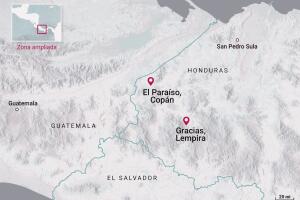
Western Honduras is a remote border area with Guatemala and El Salvador.
Mauricio Rodriguez-Pons/Univision
Ardon.jpg
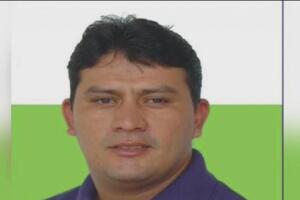
Alexander Ardon, the former Honduran mayor of El Paraíso, a cattle town in the department of Copan, will be a key witness in the case of drug trafficking against President Hernández's brother.
Lopez Sanabria (Eng)
Nery Orlando Lopez Sanabria was captured in June 2018 in Honduras with drug ledgers that implicated Tony Hernandez. At the time of his arrest, Lopez was believed to be one of the largest drug traffickers in Honduras. He was murdered in a maximum security prison in Honduras, October 26, 2019.
Courtesy of La Prensa.
Tony H DEA interview.
After his arrest at Miami airport in November 20188, Tony Hernandez sat down for an "interview" with DEA agent Sandalio Gonzalez. He made a number of self-incriminating statement about his relationship with several notorious drug traffickers that were used against him at trial.
Southern District of New York/Univision
Mauricio Hernandez Pineda.jpg
Mauricio Pineda Hernandez, is a former deputy-commissioner of the Honduran National Police who was stationed in western Honduras.
Southern District of New York evidence files.
Devis Leonel Maradiaga Rivera (ENG)
Devis Leonel Maradiaga Rivera, a former leader of the infamous 'Los Cachiros' crime family who began cooperating with the DEA in 2013 and has confessed to conspiring to kill at least 78 people.
Univision
Don H.jpg
Hector Emilio Fernandez, alias 'Don H,' was arrested in Honduras in October 2014, and extradited to the United States in September 2015. He plead guilty to trafficking 135 tons of cocaine and large quantities of methamphetamine over the course of 17 years and was sentenced to life in prison in August. Tony Hernandez admitted to the DEA that he had mert eith Don H, although he did not disclose why. Don H admitted to paying millions of dollars in bribes to Honduran officials, including former president Mel Zelaya.
Courtesy of La Prensa.
El Rojo - El Periodico.jpg
Victor Hugo Diaz Morales, alias El Rojo, confessed to trafficking at least 150 tons of cocaine with Tony Hernandez and conspiring to murder at least 18 people. Hernandez admitted during a post-arrest interview with the DEA to having had a “good friendship” with Diaz Morales, having received gifts from him as well as knowing that he was a drug trafficker.
Courtesy of El Periodico, Guatemala.
Cubeta (Eng) Mario Jose Calix.jpeg
Mario Jose Calix, alias 'Cubeta' (Bucket), was born and raised in 'Tony' Hernandez's home town of Gracias, Lempira where he was vice-mayor from 2010 to 2014. His family owns an attractive local hotel, Finca del Capitan (The Captain's Farm). According to a DEA interview with Tony Hernandez, it was an open secret that Calix was a drug trafficker. He was indicted of drug trafficking charges by the Southern District of New York on January 23 2019, and is a co-defendant in the Hernandez case.
Univision
Finca el Capitan, Gracias, Lempira
In his DEA interview, Tony Hernandez described attending meetings at Finca del Capitán, a hotel in Gracias owned by the family of accused drug trafficker Mario Jose Calix, alias 'Cubeta.' "We'd drink. They would bring in girls. Jeez, they have never been short in the girls department," he said. "As a matter of fact, some girl friends of mine went there, and ... hell! I felt terrible they were going to be passed around all of them. But, it was their lives ... one couldn’t say anything."
Marvin Valladares/Univision
Gracias coffee3.jpg
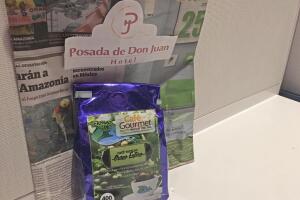
The Hernandez family run an attractive hotel in Gracias, 'La Posada de Don Juan', where they sell their own his altitude coffee named after a local hot spring, 'Termas del Rio'.