Accused Honduran drug trafficker conspired with President of Honduras, feds say
Geovanny Fuentes allegedly paid at least approximately $25,000 to Juan Orlando Hernández in exchange for protection from law enforcement and access to a cocaine laboratory strategically located near Honduras's largest port, according to a criminal complaint. Hernández ordered Fuentes to report directly to his brother, former congressman Tony Hernández, it adds. (Leer en español)
March 03, 2020 01:20 PM
March 03, 2020 03:22 PM
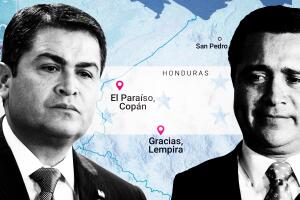
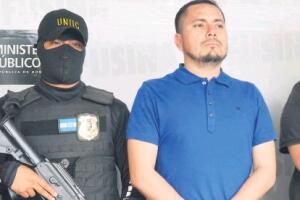
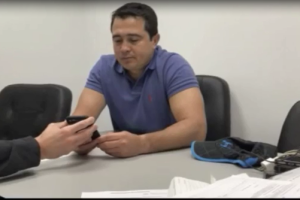
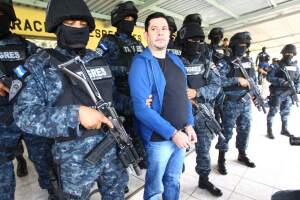
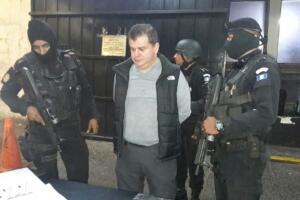
Geovanny Fuentes, 50, is accused of conspiring with high-ranking Honduran politicians and police, including President Juan Orlando Hernandez and his brother Juan Antonio ‘Tony’ Hernandez,’ to operate “unimpeded” a cocaine lab in Honduras and transport shipments of cocaine by air and sea.
“As alleged, Geovanny Daniel Fuentes Ramirez was, up until his arrest by the DEA two days ago, a prolific, powerful, and murderous cocaine trafficker in Honduras,” said Manhattan U.S. Attorney Geoffrey S. Berman.
Fuentes, 50, allegedly reported directly to former congressman Tony Hernandez, who was found guilty in New York last year of drug trafficking and faces sentencing next month. Hernandez is the brother of Honduran president Juan Orlando Hernandez, who was named as an unindicted coconspirator.
The arrest of Fuentes appears to strengthen the case for a possible future indictment of President Hernandez, who currently enjoys effective immunity as a foreign head of state. But he could face prosecution after he steps down in 2022.
The latest accusations could complicate relations between the Honduran government and the Trump administration which considers President Hernandez a key ally in its crack down on immigration from Central America along the U.S. southern border.
Hernandez has emphatically denied all previous allegations against him saying they are based on the worthless testimony of self-confessed drug traffickers seeking to cooperate with prosecutors and gain revenge on Honduras authorities after their capture. In a tweet on Tuesday, Hernandez denied he had ever taken money from Fuentes, saying the accusation was "100% false."
"Unholy alliance"
The DEA and prosecutors in New York have spent years investigating what they call an “unholy alliance" of Honduran officials and drug traffickers.
“These corrupt arrangements resulted in horrible violence in Honduras and beyond. The DEA will continue to aggressively pursue and bring to justice those who participated in these activities,” said DEA Special Agent in Charge Wendy Woolcock.
The laboratory was raided by law enforcement in 2012 and Fuentes allegedly participated in the stabbing murder of a law enforcement official who he believed was involved in the investigating it.
In 2013, Fuentes paid at least approximately $25,000 to a high-ranking Honduran official referred to in the complaint as ‘CC-4,’ in exchange for protection from further interventions by law enforcement targeting his drug trafficking activities.
The complaint does not name President Hernandez directly, but rather lists him as 'CC-4', or Co-Conspirator-4. The context, however, leaves no doubt about his identity, stating that 'CC-4' is “the president of Honduras.”
SDNY / Univision
The DEA affadavit refers to the president of Honduras as 'CC-4.'
Around the time of the bribe, during a series of meetings ‘CC-4’ allegedly “expressed interest in” the cocaine laboratory and “agreed to facilitate the use of Honduran armed forces personnel as security” for Fuentes’ operations, according to the indictment. ‘CC-4’ also “instructed Fuentes Ramirez to report directly to Juan Antonio Hernandez Alvarado for subsequent drug trafficking activities,” the complaint alleges.
Fuentes' name did not come up in the trial of Tony Hernandez and the charges against him appear to stem from evidence by a cooperating witness, jailed drug trafficker Devis Rivera Maradiaga,according to court documents obtained by Univision. Rivera Maradiaga, who was one of the leaders of the notorious 'Los Cachiros' drug gang, told prosecutors in May 2018, that Fuentes was involved in a cocaine lab near Omoa, near Puerto Cortes, the largest port on Honduras' north coast.
According to Rivera Maradiaga, a man named Melvin Sanders, who was president of a football club in the city of Choloma, was an associate in the cocaine lab. Sanders was later murdered in October 2013.
Rivera Maradiaga turned himself in to the DEA in January 2015 and testifed in the trial against Tony Hernandez. He plead guilty and has confessed to conspiring to kill at least 78 people. Rivera Maradiaga testified that he met with Tony Hernandez in February 2014 regarding money owed by the government to one of his front companies. Hernandez allegedly agreed to push the payments through in exchange for a $50,000 bribe. Maradiaga Rivera recorded the meeting and turned the tape over to the DEA.
Honduras drugs
Tony La Prensa
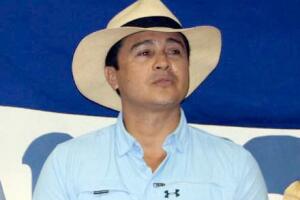
Tony Hernandez in an archive photo.
Courtesy of La Prensa
Tony's cocaine (Eng).JPG
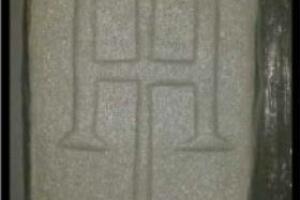
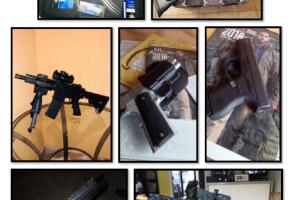
Some of the evidence against Hernandez includes weapons and cocaine stamped with his initials, 'TH.'
Court records.
Tony's Scorpion gun
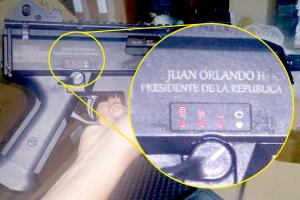
Trial exhibit #203-R4 in Tony Hernandez drug trafficking case in New York: a weapon allegedly carried by the president's brother, embossed with Honduran flag and name of his brother, president Juan Orlando Hernandez, according to prosecutors. “This picture from the defendant’s phone is the embodiment of state-sponsored drug trafficking," said U.S. Assistant Attorney, Emil Bove.
Southern Distirct of New York/David Maris/Univision
Tony's guns (Eng)
Some of the evidence against Hernandez includes these weapons and cocaine stamped with his initials, 'TH.'
Court records
Honduras drug laboratory (Eng)
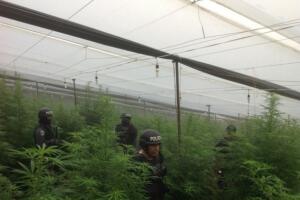
On January 31, 2014, a drug laboratory was raided in the small mountainous village of Iguala in the western province of Lempira. A special police investigation unit arrested two Colombians, seized several weapons and 6,000 marijuana and heroin plants. Two months later, Colombians were released.
Courtesy of the Honduran National Police.
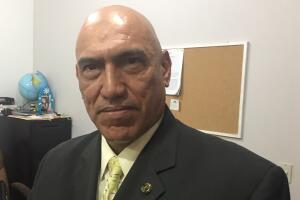
OsorioIMG_2544.JPG
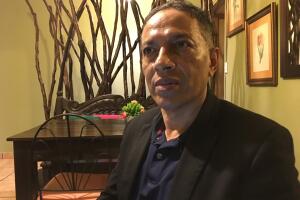
General Leandro Osorio, 55, was head of the special investigations unit of the Honduran police (DNIC) from 2012-2015.
David Adams / Univision
Tony Hernandez (Eng)
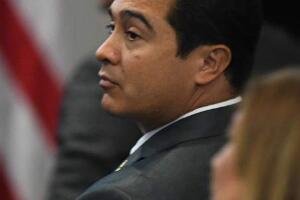
Juan Antonio 'Tony' Hernandez (Archive photo)
AP
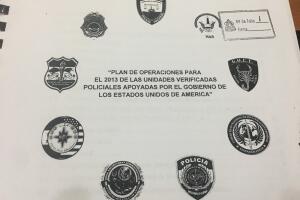
US Honduran plan 2013
In 2012, the United States and Honduras created special units to combat kidnapping and extortion, as well as a Special Tactical Operations Group (GOET) backed by the FBI with sophisticated eavesdropping technology to listen to phone calls. They prepared an action plan, entitled: "Operational Plan for 2013 of verified police units supported by the government of the United States of America."
Univision
Gen Bonilla (Eng)
The former head of the Honduran National Police, General Juan Carlos Bonilla, during an interview with Univision in 2019.
David Adams / Univision
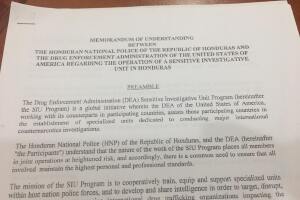
DEA memo (Eng)
On October 8, 2012, the United States and Honduras signed a secret agreement to create 'Sensitive Investigative Unit" program', or SIU in Honduras. The program allows the DEA to vet and train local police and military personnel for use in operations focused on drug traffickers and cartels.
Univision
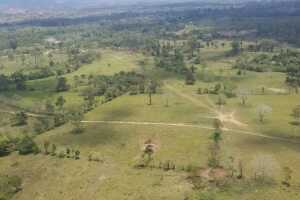
Clandestine airstrip in Mosquitia, Honduras
A clandestine airstrip used by drug traffickers in the department of Gracias a Dios, in eastern Honduras.
FUSINA (National Interagency Security Force)
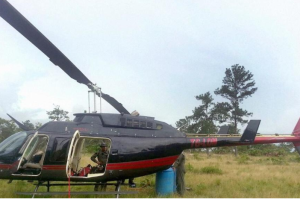
Tony's helicopter.PNG
An alleged drug trafficking helicopter seized in the Mosquitia region of Honduras in 2014.
Univision Investiga
Santos Honduras
Former Honduran army captain, Santos Rodríguez Orellana, participated in the anti-drug missions. He was suspended from the armed forces and then disgracedly discharged after being involved in the 2014 seizure of a helicopter linked to Tony Hernandez.
Marvin Valladares/Univision
Explosion at clandestine airstrip in Honduras
One of four explosions during a Honduran military operation to disable a clandestine airstrip in eastern Honduras, creating craters 10 meters wide and 5 meters deep. May 15, 2019.
FUSINA (National Interagency Security Force)
Destroyed clandestine airstrip in Honduras
The Honduran Armed Forces disabled a clandestine airstrip with explosives on May 15, 2019, in the Brus Laguna region of Gracias a Dios, eastern Honduras. But officials told Univision the runways were often quickly repaired in a matter of days by teams of men armed with chainsaws and baskets of dirt to fill in the craters. Honduran officers said they were offered $150,000 to look the other way.
A clandestine airstrip in the department of Gracias a Dios, in eastern Honduras.
FUSINA (National Inter Agency Security Force)
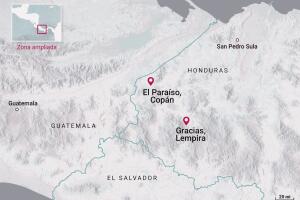
PHOTOS/Map of Honduras.jpg
Western Honduras is a remote border area with Guatemala and El Salvador.
Mauricio Rodriguez-Pons/Univision
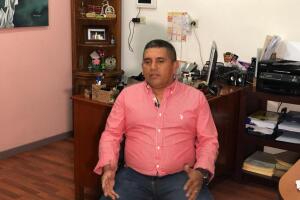
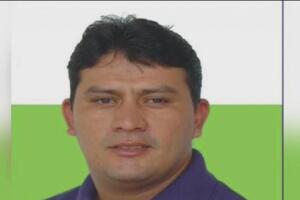
Ardon.jpg
Alexander Ardon, the former Honduran mayor of El Paraíso, a cattle town in the department of Copan, will be a key witness in the case of drug trafficking against President Hernández's brother.
Lopez Sanabria (Eng)
Nery Orlando Lopez Sanabria was captured in June 2018 in Honduras with drug ledgers that implicated Tony Hernandez. At the time of his arrest, Lopez was believed to be one of the largest drug traffickers in Honduras. He was murdered in a maximum security prison in Honduras, October 26, 2019.
Courtesy of La Prensa.
Tony H DEA interview.
After his arrest at Miami airport in November 20188, Tony Hernandez sat down for an "interview" with DEA agent Sandalio Gonzalez. He made a number of self-incriminating statement about his relationship with several notorious drug traffickers that were used against him at trial.
Southern District of New York/Univision
Mauricio Hernandez Pineda.jpg
Mauricio Pineda Hernandez, is a former deputy-commissioner of the Honduran National Police who was stationed in western Honduras.
Southern District of New York evidence files.
Devis Leonel Maradiaga Rivera (ENG)
Devis Leonel Maradiaga Rivera, a former leader of the infamous 'Los Cachiros' crime family who began cooperating with the DEA in 2013 and has confessed to conspiring to kill at least 78 people.
Univision
Don H.jpg
Hector Emilio Fernandez, alias 'Don H,' was arrested in Honduras in October 2014, and extradited to the United States in September 2015. He plead guilty to trafficking 135 tons of cocaine and large quantities of methamphetamine over the course of 17 years and was sentenced to life in prison in August. Tony Hernandez admitted to the DEA that he had mert eith Don H, although he did not disclose why. Don H admitted to paying millions of dollars in bribes to Honduran officials, including former president Mel Zelaya.
Courtesy of La Prensa.
El Rojo - El Periodico.jpg
Victor Hugo Diaz Morales, alias El Rojo, confessed to trafficking at least 150 tons of cocaine with Tony Hernandez and conspiring to murder at least 18 people. Hernandez admitted during a post-arrest interview with the DEA to having had a “good friendship” with Diaz Morales, having received gifts from him as well as knowing that he was a drug trafficker.
Courtesy of El Periodico, Guatemala.
Cubeta (Eng) Mario Jose Calix.jpeg
Mario Jose Calix, alias 'Cubeta' (Bucket), was born and raised in 'Tony' Hernandez's home town of Gracias, Lempira where he was vice-mayor from 2010 to 2014. His family owns an attractive local hotel, Finca del Capitan (The Captain's Farm). According to a DEA interview with Tony Hernandez, it was an open secret that Calix was a drug trafficker. He was indicted of drug trafficking charges by the Southern District of New York on January 23 2019, and is a co-defendant in the Hernandez case.
Univision
Finca el Capitan, Gracias, Lempira
In his DEA interview, Tony Hernandez described attending meetings at Finca del Capitán, a hotel in Gracias owned by the family of accused drug trafficker Mario Jose Calix, alias 'Cubeta.' "We'd drink. They would bring in girls. Jeez, they have never been short in the girls department," he said. "As a matter of fact, some girl friends of mine went there, and ... hell! I felt terrible they were going to be passed around all of them. But, it was their lives ... one couldn’t say anything."
Marvin Valladares/Univision
Gracias coffee3.jpg
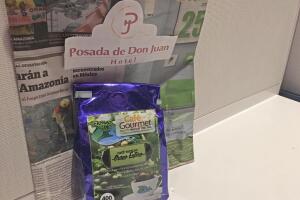
The Hernandez family run an attractive hotel in Gracias, 'La Posada de Don Juan', where they sell their own his altitude coffee named after a local hot spring, 'Termas del Rio'.