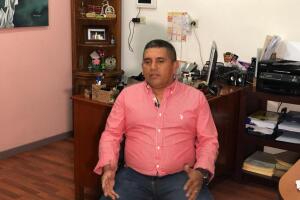
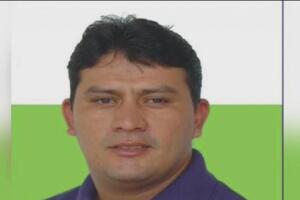
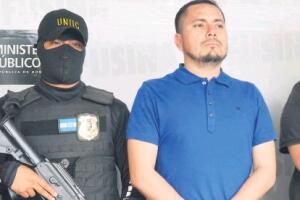
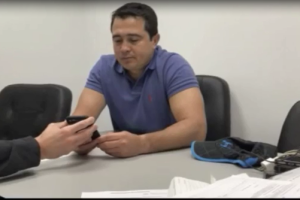
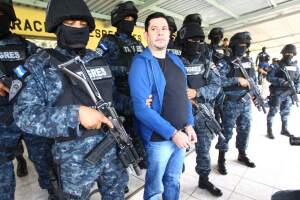
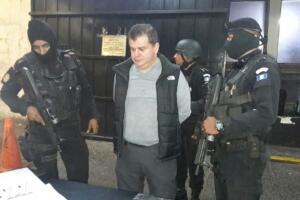
After two years in hiding, former Honduran police chief General Juan Carlos Bonilla Valladares has been captured by Honduran authorities, official sources confirmed to Univision.
The accused drug trafficker and murderer faces extradition to the United States, where he was named in a drug trafficking indictment that also includes former president Juan Orlando Hernández.
Bonilla, 62, also known as 'El Tigre', was charged in April 2020 by U.S. prosecutors in New York with allegedly abusing his official position to protect multi-ton cocaine shipments on behalf of Hernández, and his brother Tony Hernández, a former congressman who was sentenced last year by a federal judge in New York to life in prison.
Bonilla was arrested by Honduran police at a toll booth on the main highway between the capital, Tegucigalpa, and Comayagua, near the country's international airport.
Juan Orlando Hernández was indicted last month on drug and arms trafficking charges and detained at his home in Tegucigalpa. He is awaiting a Supreme Court decision next week on whether he will be extradited to the United States.
In photos: the nest of narcos in northwestern Honduras
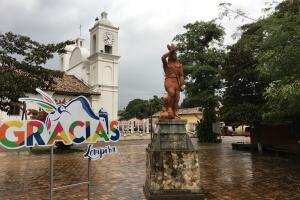
Gracias Lempira (ENG).JPG
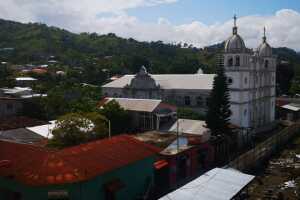
The central park of Gracias, Lempira, shows its indigenous history and the Spanish colonial era.
David Adams/Univision
PHOTOS/Daysi Iglesias1.JPG
Daysi Iglesias sells 'ticusos' a corn dough with beans as well as fruit juices, in the central square of Gracias, Honduras. "Yes, I know that the president's brother is in jail, but only they know what they've been up to. I've no idea. We just stick to our work."
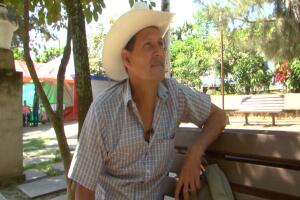
PHOTOS/Domingo Gutierrez.jpg
Gracias coffee grower, Domingo Gutierrez, 58, seated in the central square. Coffee prices have fallen and he struggles to make a living off his eight acres.
PHOTOS/Casa del presidente en Gracias.jpg
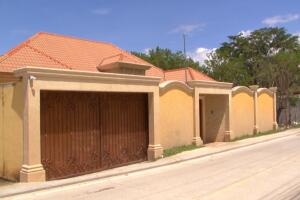
PHOTOS/Cubate house.jpg
The house of former Gracias deputy mayor, Mario Jose Calix, who was indicted in January with New York and U.S. officials have requested the extradition of Calix, though his whereabouts are unknown. Univision visited his home in Gracias and spoke to his mother who said she hasn't seen her son son "in ages."
Marvin Valladares/Univision
PHOTOS/casa en construccion en Gracias.jpg
On the outskirts of Gracias, several modern, luxury residences are under construction that stand out in sharp contrast to the traditional, modest single-story homes in the town.
Marvin Valladares/Univision
Gracias municipality.png
The municipality of Gracias has 55,000 inhabitants, of which 22,000 live in the town and has an annual budget of approximately $ 2 million, according to the mayor.
Tony Hernandez and football.jpg
En Gracias, Tony Hernández es recordado como un típico ganadero que fue elegido para el congreso en 2013, así como un apasionado jugador de fútbol.
Municipio de Gracias, Lempira/Facebook
PHOTOS/Gracias airport.jpg
In April 2016 the government inaugurated a small, local airport on the outskirts of town as part of a national tourist plan to link major cities with the nearby famous ancient Mayan ruins of Copan. But the tourists never came.
David Adams/Univision
PHOTOS/Gracias airport2.JPG
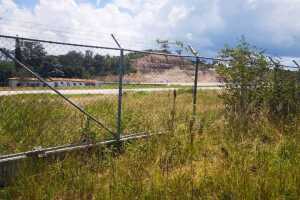
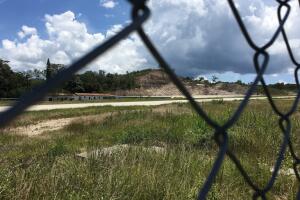
The Gracias airport runway is now used almost exclusively by president Hernandez who visits at weekends. Residents also talk in hushed tones of suspicious planes landing in the dead of night bringing cocaine from Colombia, and the eastern Atlantic coast of Honduras.
David Adams/Univision
PHOTOS/Map of Honduras.jpg
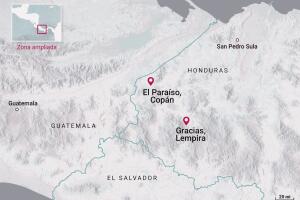
Western Honduras is a remote border area with Guatemala and El Salvador.
Mauricio Rodriguez-Pons/Univision
PHOTOS/El Paraiso.JPG
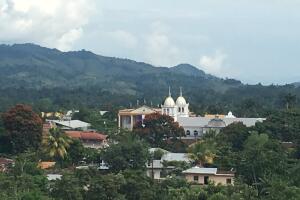
El Paraiso, Honduras, is nestled into the mountains of northwest Honduras just a few miles from the border with Guatemala. Draf traffickers took advantage of its strategic location to smuggle cocaine across the border.
David Adams/Univision
PHOTOS/El Paraiso municipality.jpg
Mayor Alexander Ardon built a splendid new municipal building with a portico with columns that became famous in the Honduran media. But local residents say he did good things for the town, providing basic services they didn't have before.
Claudia Mendoza/Univision
PHOTOS/El Paraiso iglesia.jpg
Even if some of the public works in El Paraiso may have been paid for with drug money, residents said they were grateful. When killings took place they were mostly between the drug traffickers. they added.
Claudia Mendoza/Univision
PHOTOS/El Paraiso streets.jpg
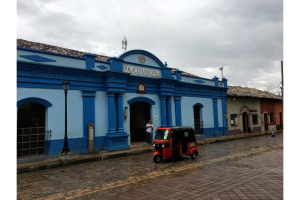
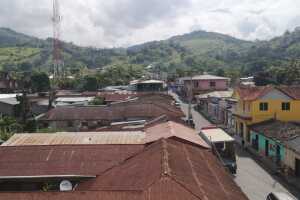
El Paraiso is a quiet town located in the province of Copan, in northwest Honduras. It became notorious in recent years as a haven for drug traffickers seeking to transport cocaine into Guatemala en route to the United States.
Cludia Mendoza/Univison
PHOTOS/El Paraiso iglesia y parque.jpg
Across from the El Paraiso town hall, a new park is being built wiht miunicpal funds, complete with a replica of a Mayan temple. The town in close to the famous Mayan ruins of Copan, one of the country's main tourist attractions.
Claudia Mendoza/Univision
PHOTOS/Adonias Morales.JPG
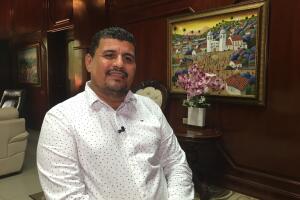
Adonias Morales, 53, mayor of El Paraíso in his office. His close friend and former mayor, Alexander Ardon, turned himself in to the DEA in February and is expected to testify against Tony Hernandez, brother of the Honduran president, who goes to trial in New York on October 2, accused of being "a violent multi-ton drug trafficker."
David Adams/Univision
Marvin.JPG
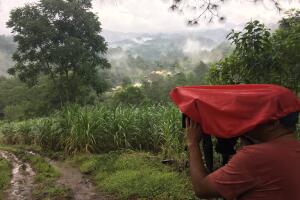
Univision cameraman, Marvin Valladares, captures images of hillsides cloaked in mist in western Honduras.
David Adams/Univision
Bonilla was police chief in western Honduras, a key drug trafficking area
Bonilla was charged in federal court in New York with conspiracy to traffic cocaine into the United States and weapons offences related to the use and possession of machine guns and destructive devices. The United States requested his extradition last year and the decision now rests in the hands of the Honduran Supreme Court.
Bonilla allegedly "abused his positions in Honduran law enforcement to circumvent the law and play a key role in a violent international drug trafficking conspiracy," prosecutors said. He also "engaged in acts of extreme violence, including the murder of a rival trafficker, in furtherance of the conspiracy," they added.
Univision met with Bonilla in Honduras several times in 2019 after he was identified as a coconspirator in the Hernandez case and claimed to have worked closely with the DEA during his time as police chief. He denied conspiring with the Hernández brothers, or any other drug traffickers.
Bonilla was a member of the Honduran National Police between approximately 1985 and approximately 2016. During his tenure, he held high-ranking positions, including Regional Chief of Police in western Honduras, a strategically important area for drug traffickers.
In exchange for bribes paid from drug proceeds, Bonilla "directed members of the Honduran National Police ... to allow cocaine shipments to pass through police checkpoints without being inspected or seized," prosecutors said. He also allegedly provided members of the conspiracy with sensitive law enforcement information to facilitate cocaine shipments, including information regarding air and maritime interdiction operations.
In photos: Tony Hernandez and the drug war in Honduras
Tony La Prensa
Tony Hernandez in an archive photo.
Courtesy of La Prensa
Tony's cocaine (Eng).JPG
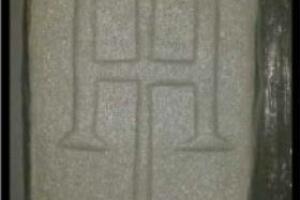
Some of the evidence against Hernandez includes weapons and cocaine stamped with his initials, 'TH.'
Court records.
Tony's Scorpion gun
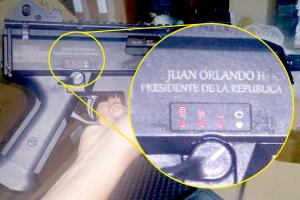
Trial exhibit #203-R4 in Tony Hernandez drug trafficking case in New York: a weapon allegedly carried by the president's brother, embossed with Honduran flag and name of his brother, president Juan Orlando Hernandez, according to prosecutors. “This picture from the defendant’s phone is the embodiment of state-sponsored drug trafficking," said U.S. Assistant Attorney, Emil Bove.
Southern Distirct of New York/David Maris/Univision
Tony's guns (Eng)
Some of the evidence against Hernandez includes these weapons and cocaine stamped with his initials, 'TH.'
Court records
Honduras drug laboratory (Eng)
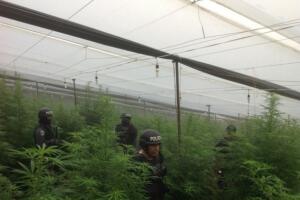
On January 31, 2014, a drug laboratory was raided in the small mountainous village of Iguala in the western province of Lempira. A special police investigation unit arrested two Colombians, seized several weapons and 6,000 marijuana and heroin plants. Two months later, Colombians were released.
Courtesy of the Honduran National Police.
OsorioIMG_2544.JPG
General Leandro Osorio, 55, was head of the special investigations unit of the Honduran police (DNIC) from 2012-2015.
David Adams / Univision
Tony Hernandez (Eng)
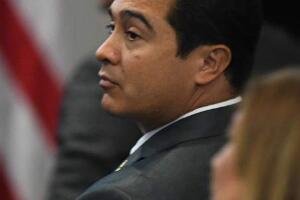
Juan Antonio 'Tony' Hernandez (Archive photo)
AP
US Honduran plan 2013
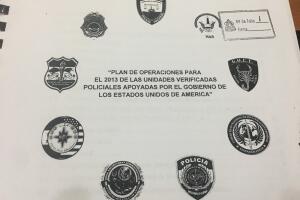
In 2012, the United States and Honduras created special units to combat kidnapping and extortion, as well as a Special Tactical Operations Group (GOET) backed by the FBI with sophisticated eavesdropping technology to listen to phone calls. They prepared an action plan, entitled: "Operational Plan for 2013 of verified police units supported by the government of the United States of America."
Univision
Gen Bonilla (Eng)
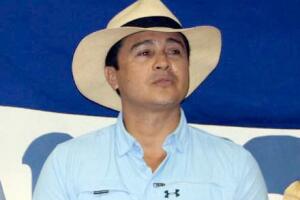
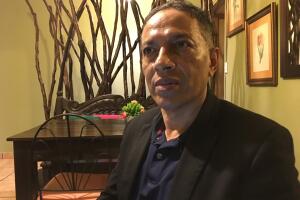
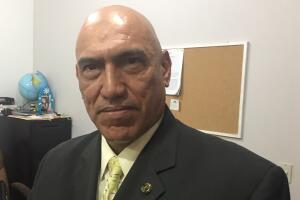
The former head of the Honduran National Police, General Juan Carlos Bonilla, during an interview with Univision in 2019.
David Adams / Univision
DEA memo (Eng)
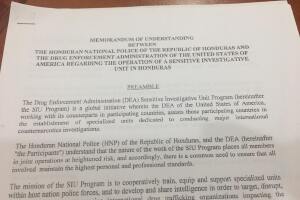
On October 8, 2012, the United States and Honduras signed a secret agreement to create 'Sensitive Investigative Unit" program', or SIU in Honduras. The program allows the DEA to vet and train local police and military personnel for use in operations focused on drug traffickers and cartels.
Univision
Clandestine airstrip in Mosquitia, Honduras
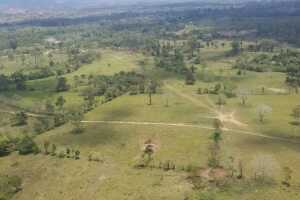
A clandestine airstrip used by drug traffickers in the department of Gracias a Dios, in eastern Honduras.
FUSINA (National Interagency Security Force)
Tony's helicopter.PNG
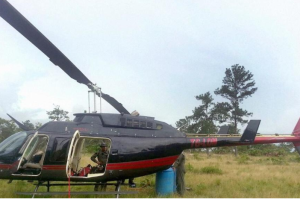
An alleged drug trafficking helicopter seized in the Mosquitia region of Honduras in 2014.
Univision Investiga
Santos Honduras
Former Honduran army captain, Santos Rodríguez Orellana, participated in the anti-drug missions. He was suspended from the armed forces and then disgracedly discharged after being involved in the 2014 seizure of a helicopter linked to Tony Hernandez.
Marvin Valladares/Univision
Explosion at clandestine airstrip in Honduras
One of four explosions during a Honduran military operation to disable a clandestine airstrip in eastern Honduras, creating craters 10 meters wide and 5 meters deep. May 15, 2019.
FUSINA (National Interagency Security Force)
Destroyed clandestine airstrip in Honduras
The Honduran Armed Forces disabled a clandestine airstrip with explosives on May 15, 2019, in the Brus Laguna region of Gracias a Dios, eastern Honduras. But officials told Univision the runways were often quickly repaired in a matter of days by teams of men armed with chainsaws and baskets of dirt to fill in the craters. Honduran officers said they were offered $150,000 to look the other way.
FUSINA (National Interinstitutional Security Force)
Clandestine airstrip
A clandestine airstrip in the department of Gracias a Dios, in eastern Honduras.
FUSINA (National Inter Agency Security Force)
PHOTOS/Map of Honduras.jpg
Western Honduras is a remote border area with Guatemala and El Salvador.
Mauricio Rodriguez-Pons/Univision
Ardon.jpg
Alexander Ardon, the former Honduran mayor of El Paraíso, a cattle town in the department of Copan, will be a key witness in the case of drug trafficking against President Hernández's brother.
Lopez Sanabria (Eng)
Nery Orlando Lopez Sanabria was captured in June 2018 in Honduras with drug ledgers that implicated Tony Hernandez. At the time of his arrest, Lopez was believed to be one of the largest drug traffickers in Honduras. He was murdered in a maximum security prison in Honduras, October 26, 2019.
Courtesy of La Prensa.
Tony H DEA interview.
After his arrest at Miami airport in November 20188, Tony Hernandez sat down for an "interview" with DEA agent Sandalio Gonzalez. He made a number of self-incriminating statement about his relationship with several notorious drug traffickers that were used against him at trial.
Southern District of New York/Univision
Mauricio Hernandez Pineda.jpg
Mauricio Pineda Hernandez, is a former deputy-commissioner of the Honduran National Police who was stationed in western Honduras.
Southern District of New York evidence files.
Devis Leonel Maradiaga Rivera (ENG)
Devis Leonel Maradiaga Rivera, a former leader of the infamous 'Los Cachiros' crime family who began cooperating with the DEA in 2013 and has confessed to conspiring to kill at least 78 people.
Univision
Don H.jpg
Hector Emilio Fernandez, alias 'Don H,' was arrested in Honduras in October 2014, and extradited to the United States in September 2015. He plead guilty to trafficking 135 tons of cocaine and large quantities of methamphetamine over the course of 17 years and was sentenced to life in prison in August. Tony Hernandez admitted to the DEA that he had mert eith Don H, although he did not disclose why. Don H admitted to paying millions of dollars in bribes to Honduran officials, including former president Mel Zelaya.
Courtesy of La Prensa.
El Rojo - El Periodico.jpg
Victor Hugo Diaz Morales, alias El Rojo, confessed to trafficking at least 150 tons of cocaine with Tony Hernandez and conspiring to murder at least 18 people. Hernandez admitted during a post-arrest interview with the DEA to having had a “good friendship” with Diaz Morales, having received gifts from him as well as knowing that he was a drug trafficker.
Courtesy of El Periodico, Guatemala.
Cubeta (Eng) Mario Jose Calix.jpeg
Mario Jose Calix, alias 'Cubeta' (Bucket), was born and raised in 'Tony' Hernandez's home town of Gracias, Lempira where he was vice-mayor from 2010 to 2014. His family owns an attractive local hotel, Finca del Capitan (The Captain's Farm). According to a DEA interview with Tony Hernandez, it was an open secret that Calix was a drug trafficker. He was indicted of drug trafficking charges by the Southern District of New York on January 23 2019, and is a co-defendant in the Hernandez case.
Univision
Finca el Capitan, Gracias, Lempira
In his DEA interview, Tony Hernandez described attending meetings at Finca del Capitán, a hotel in Gracias owned by the family of accused drug trafficker Mario Jose Calix, alias 'Cubeta.' "We'd drink. They would bring in girls. Jeez, they have never been short in the girls department," he said. "As a matter of fact, some girl friends of mine went there, and ... hell! I felt terrible they were going to be passed around all of them. But, it was their lives ... one couldn’t say anything."
Marvin Valladares/Univision
Gracias coffee3.jpg
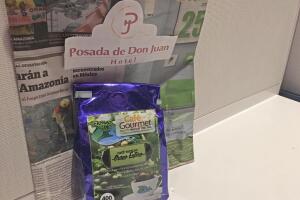
The Hernandez family run an attractive hotel in Gracias, 'La Posada de Don Juan', where they sell their own his altitude coffee named after a local hot spring, 'Termas del Rio'.