New York anti-narcotics prosecutor leaves, raising questions about major drug trafficking cases
Emil Bove led the New York prosecution of key political figures in Honduras and Venezuela. His departure leaves a hole in the Justice Department, but that won't affect ongoing cases, experts say. (Leer en español)
January 19, 2022 05:28 PM
January 19, 2022 05:35 PM
A former top U.S. federal prosecutor in New York whose resignation last month sparked rumors that he had been ousted or that the high-profile cases he oversaw could suffer in his absence announced that he has joined a prominent law firm.
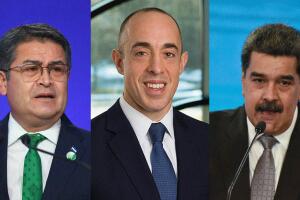
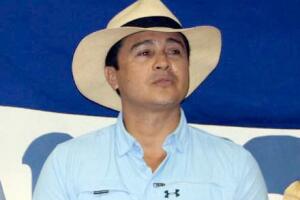
Emil Bove was until recently the co-chief of the national security and international narcotics unit at the Southern District of New York (SDNY), where he oversaw drug trafficking cases against such notable figures as Venezuelan president Nicolás Maduro and Juan Antonio 'Tony' Hernández, a brother of the president of Honduras.
Far from being pushed out of the job, Bove told Univision that, like many in his position, he chose to leave for a job in the private sector after establishing a highly successful track record over more than nine years.
Tony Hernandez found guilty in U.S. trial
Juan Orlando Hernández
Bove’s departure from what many consider the foremost criminal investigating office in the country, came less than a month before Honduran president Juan Orlando Hernández is due to step down from office on January 27, amidst widespread speculation that he could be indicted on charges related to drug trafficking.
Prosecutors in the Tony Hernández trial, and two other cases, have made no secret that president Hernandez is under investigation for allegedly accepting millions in bribes from drug traffickers, including the notorious former boss of the Sinaloa Cartel, Joaquín “El Chapo” Guzmán.
Hernández has strongly denied the allegations contending that witnesses made up evidence against him as revenge for being extradited. Hernández has not been indicted on any charges so far, although that could be because the U.S. has a policy of not indicting sitting heads of state, potentially leaving him vulnerable after he leaves office next week.
Bove issued a statement Wednesday stressing that his resignation would in no way affect the on-going cases, stressing the teamwork among different law enforcement agencies that goes into building drug cases.
Team effort
“Without getting into any particular case or investigation, there is historic public record of the long-term partnership between SDNY and the DEA’s Special Operations Division,” he said. “The track record of that partnership is tireless efforts to pursue justice based on the evidence. I can’t fathom of a reason that those traditions would change,” he added.
Bove’s departure was unlikely to have any effect on his cases, as federal prosecutors have large teams who are fully briefed on important cases and are ready to step in when necessary, said David Weinstein, a former state and federal prosecutor in Miami who is now in private practice.
“To Bove’s credit, he was a driving factor, but you never do big cases alone. It’s not like they are going to fall apart because you are leaving,” he said.
Weinstein compared Bove’s departure to a baseball team losing a star pitcher. “It’s always a team effort with the federal government. They have a strong bench and so you can always find a replacement. That’s why there are dynasties in sports,” he said.
Bove had already begun to phase out or frontline prosecution duties after the Tony Hernández trial in October 2019. A fellow prosecutor, Amanda Houle, took over last month as Co-Chief of the National Security & International Narcotics Unit. Other prosecutors also stepped in last year to handle the trial – and conviction - of another Honduran trafficker, Geovanny Fuentes.
Rumors
Bove’s resignation, which took effect on December 30, announced in a brief court document with no explanation, sparked widespread rumors that he was being shown the door after a scandal in 2020 involving misconduct by staff in his unit at SDNY.
The president of El Salvador, Nayib Bukele, jumped in with a tweet when the resignation became public, saying: “The U.S. government just fired a prosecutor who jailed the brother of [Juan Orlando Hernández] for drug trafficking. Then they say they are concerned about justice in our countries.”
Bukele was responding to a tweet by a journalist which suggested that: “Latin American narcos may sleep easier” after the news that Bove was stepping down.
That prompted the Southern District of New York to issue a rare statement praising Bove’s “distinguished tenure as a federal prosecutor” and confirming that it was his decision to pursue a career in the private sector.
A judge found no evidence that prosecutors intentionally withheld evidence from lawyers representing the Iranian banker, but she said they made a “deliberate attempt to obscure” the truth and failed to properly disclose a key document that might have helped the defense.
As a result, prosecutors dropped all charges in the case, but Bove, who was not directly implicated in the misconduct, kept his job.
Move to private practice
Legal experts say the high profile demands of the job often mean that federal prosecutors opt to leave government service after 10 years or so. Their legal experience means they are highly sought after by private sector law firms that typically pay two or three times the salaries of federal prosecutors. “If you are going to make the jump to the private sector you need to seize the moment. Opportunity often only knocks once,” said Weinstein.
Bove is joining the government and corporate investigations group at New York firm Chiesa, Shahinian & Giantomasi, a 50-year-old firm with a legal staff that includes seven former federal prosecutors from the New York-New Jersey area.
Courtesy of CSH
Emil Bove is the former head of the National Security and International Narcotics unit at the Southern District of New York. He joined the lawfirm CSG in January 2022.
“Coming out of his leadership position at the SDNY, Emil brings with him incredible experience in complex economic and national security practice areas that will broaden our growing client base,” said Jeffrey S. Chiesa of CSG in a statement Wednesday.
Bove, who is 40, told Univision that CSG was a good fit for him due to its team of lawyers with backgrounds in law enforcement and public service. “The firm offered me a platform to develop a practice, drawing on my previous experiences, to advise clients in their most sensitive white-collar investigations and national security matters,” he said in a statement. “The more I learned about the firm and its people, the clearer it became to me and my family that this was the right next step in my career,” he added.
During his nine years with SDNY, Bove tried 13 federal cases and worked on 18 appeals, and achieved countless guilty pleas. The cases he worked on include a litany of high profile figures, such as Yani and Yankel Rosenthal, the relatives of two Honduran presidents, as well as Venezuela’s Maduro, former Venezuelan Vice President Tareck El Aissami and the former head of Venezuelan military intelligence, General Hugo Carvajal.
Besides the Latin American cases he;s arguably most famous for, he supervised many other high-profile prosecutions including an alleged multi-billion-dollar scheme to evade sanctions against Iran, a cryptocurrency scheme to evade sanctions against North Korea, the largest theft of classified information in the CIA’s history, and a 2017 fatal terrorist attack in Manhattan.
Bove said he hoped to continue working on international criminal cases involving Latin America, only on the other side of the courtroom. He noted that President Joe Biden has emphasized that foreign corruption is a national security priority for the U.S. government. “I look forward to helping clients navigate those issues, whether that is providing business and compliance advice, engaging with US officials on their behalf during investigations, or representing them at trial,” he said.
In photos: Tony Hernandez and the drug war in Honduras
Tony La Prensa
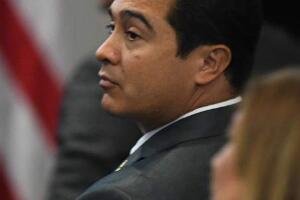
Tony Hernandez in an archive photo.
Courtesy of La Prensa
Tony's cocaine (Eng).JPG
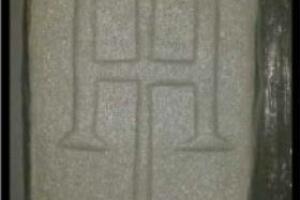
Some of the evidence against Hernandez includes weapons and cocaine stamped with his initials, 'TH.'
Court records.
Tony's Scorpion gun
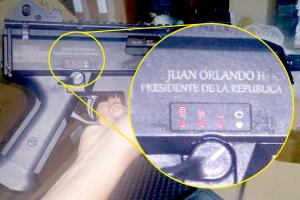
Trial exhibit #203-R4 in Tony Hernandez drug trafficking case in New York: a weapon allegedly carried by the president's brother, embossed with Honduran flag and name of his brother, president Juan Orlando Hernandez, according to prosecutors. “This picture from the defendant’s phone is the embodiment of state-sponsored drug trafficking," said U.S. Assistant Attorney, Emil Bove.
Southern Distirct of New York/David Maris/Univision
Tony's guns (Eng)
Some of the evidence against Hernandez includes these weapons and cocaine stamped with his initials, 'TH.'
Court records
Honduras drug laboratory (Eng)
On January 31, 2014, a drug laboratory was raided in the small mountainous village of Iguala in the western province of Lempira. A special police investigation unit arrested two Colombians, seized several weapons and 6,000 marijuana and heroin plants. Two months later, Colombians were released.
Courtesy of the Honduran National Police.
OsorioIMG_2544.JPG
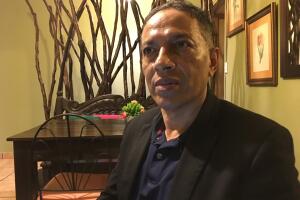
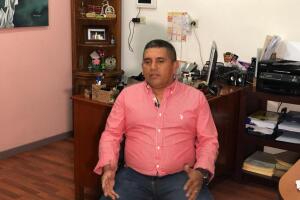
General Leandro Osorio, 55, was head of the special investigations unit of the Honduran police (DNIC) from 2012-2015.
David Adams / Univision
Tony Hernandez (Eng)
Juan Antonio 'Tony' Hernandez (Archive photo)
AP
US Honduran plan 2013
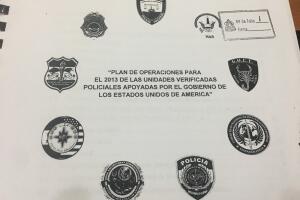
In 2012, the United States and Honduras created special units to combat kidnapping and extortion, as well as a Special Tactical Operations Group (GOET) backed by the FBI with sophisticated eavesdropping technology to listen to phone calls. They prepared an action plan, entitled: "Operational Plan for 2013 of verified police units supported by the government of the United States of America."
Univision
Gen Bonilla (Eng)
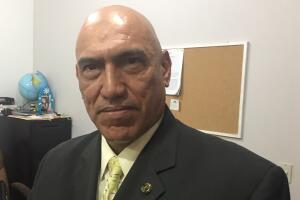
The former head of the Honduran National Police, General Juan Carlos Bonilla, during an interview with Univision in 2019.
David Adams / Univision
DEA memo (Eng)
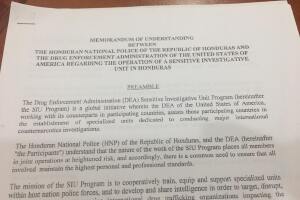
On October 8, 2012, the United States and Honduras signed a secret agreement to create 'Sensitive Investigative Unit" program', or SIU in Honduras. The program allows the DEA to vet and train local police and military personnel for use in operations focused on drug traffickers and cartels.
Univision
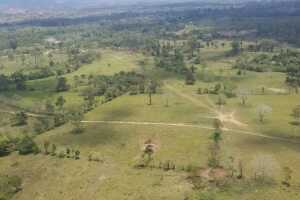
Clandestine airstrip in Mosquitia, Honduras
A clandestine airstrip used by drug traffickers in the department of Gracias a Dios, in eastern Honduras.
FUSINA (National Interagency Security Force)
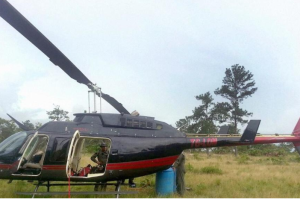
Tony's helicopter.PNG
An alleged drug trafficking helicopter seized in the Mosquitia region of Honduras in 2014.
Univision Investiga
Santos Honduras
Former Honduran army captain, Santos Rodríguez Orellana, participated in the anti-drug missions. He was suspended from the armed forces and then disgracedly discharged after being involved in the 2014 seizure of a helicopter linked to Tony Hernandez.
Marvin Valladares/Univision
Explosion at clandestine airstrip in Honduras
One of four explosions during a Honduran military operation to disable a clandestine airstrip in eastern Honduras, creating craters 10 meters wide and 5 meters deep. May 15, 2019.
FUSINA (National Interagency Security Force)
Destroyed clandestine airstrip in Honduras
The Honduran Armed Forces disabled a clandestine airstrip with explosives on May 15, 2019, in the Brus Laguna region of Gracias a Dios, eastern Honduras. But officials told Univision the runways were often quickly repaired in a matter of days by teams of men armed with chainsaws and baskets of dirt to fill in the craters. Honduran officers said they were offered $150,000 to look the other way.
A clandestine airstrip in the department of Gracias a Dios, in eastern Honduras.
FUSINA (National Inter Agency Security Force)
PHOTOS/Map of Honduras.jpg
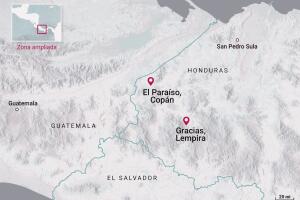
Western Honduras is a remote border area with Guatemala and El Salvador.
Mauricio Rodriguez-Pons/Univision
Ardon.jpg
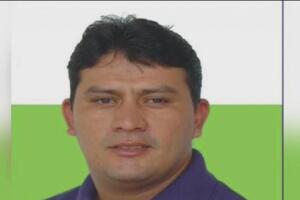
Alexander Ardon, the former Honduran mayor of El Paraíso, a cattle town in the department of Copan, will be a key witness in the case of drug trafficking against President Hernández's brother.
Lopez Sanabria (Eng)
Nery Orlando Lopez Sanabria was captured in June 2018 in Honduras with drug ledgers that implicated Tony Hernandez. At the time of his arrest, Lopez was believed to be one of the largest drug traffickers in Honduras. He was murdered in a maximum security prison in Honduras, October 26, 2019.
Courtesy of La Prensa.
Tony H DEA interview.
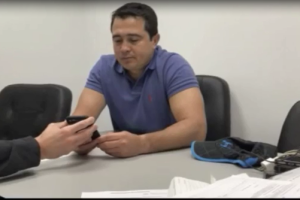
After his arrest at Miami airport in November 20188, Tony Hernandez sat down for an "interview" with DEA agent Sandalio Gonzalez. He made a number of self-incriminating statement about his relationship with several notorious drug traffickers that were used against him at trial.
Southern District of New York/Univision
Mauricio Hernandez Pineda.jpg
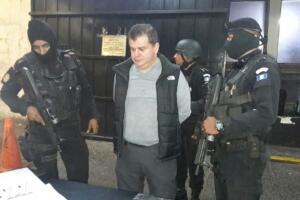
Mauricio Pineda Hernandez, is a former deputy-commissioner of the Honduran National Police who was stationed in western Honduras.
Southern District of New York evidence files.
Devis Leonel Maradiaga Rivera (ENG)
Devis Leonel Maradiaga Rivera, a former leader of the infamous 'Los Cachiros' crime family who began cooperating with the DEA in 2013 and has confessed to conspiring to kill at least 78 people.
Univision
Don H.jpg
Hector Emilio Fernandez, alias 'Don H,' was arrested in Honduras in October 2014, and extradited to the United States in September 2015. He plead guilty to trafficking 135 tons of cocaine and large quantities of methamphetamine over the course of 17 years and was sentenced to life in prison in August. Tony Hernandez admitted to the DEA that he had mert eith Don H, although he did not disclose why. Don H admitted to paying millions of dollars in bribes to Honduran officials, including former president Mel Zelaya.
Courtesy of La Prensa.
El Rojo - El Periodico.jpg
Victor Hugo Diaz Morales, alias El Rojo, confessed to trafficking at least 150 tons of cocaine with Tony Hernandez and conspiring to murder at least 18 people. Hernandez admitted during a post-arrest interview with the DEA to having had a “good friendship” with Diaz Morales, having received gifts from him as well as knowing that he was a drug trafficker.
Courtesy of El Periodico, Guatemala.
Cubeta (Eng) Mario Jose Calix.jpeg
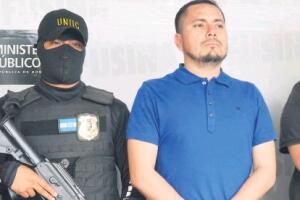
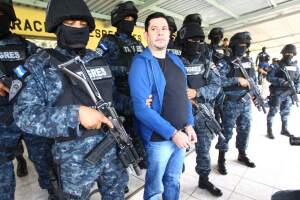
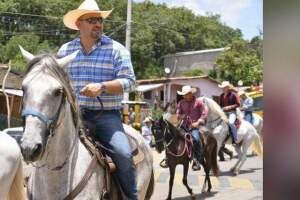
Mario Jose Calix, alias 'Cubeta' (Bucket), was born and raised in 'Tony' Hernandez's home town of Gracias, Lempira where he was vice-mayor from 2010 to 2014. His family owns an attractive local hotel, Finca del Capitan (The Captain's Farm). According to a DEA interview with Tony Hernandez, it was an open secret that Calix was a drug trafficker. He was indicted of drug trafficking charges by the Southern District of New York on January 23 2019, and is a co-defendant in the Hernandez case.
Univision
Finca el Capitan, Gracias, Lempira
In his DEA interview, Tony Hernandez described attending meetings at Finca del Capitán, a hotel in Gracias owned by the family of accused drug trafficker Mario Jose Calix, alias 'Cubeta.' "We'd drink. They would bring in girls. Jeez, they have never been short in the girls department," he said. "As a matter of fact, some girl friends of mine went there, and ... hell! I felt terrible they were going to be passed around all of them. But, it was their lives ... one couldn’t say anything."
Marvin Valladares/Univision
Gracias coffee3.jpg
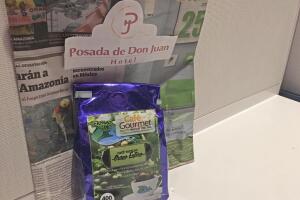
The Hernandez family run an attractive hotel in Gracias, 'La Posada de Don Juan', where they sell their own his altitude coffee named after a local hot spring, 'Termas del Rio'.