A former senior Honduran police officer was arested on Wednesday in New York, accused of conspiracy to traffic cocaine along with Tony Hernández, the brother of the president of Honduras, according to court documents.
He arrest comes days before Tony Hernandez is due to be sentenced in New York on February 24, after he was convicted by a New York jury in October. He faces a minimum sentence of 30 years in prison and a maximum sentence of life imprisonment.
Mauricio Hernández was identified in that trial as a cousin of Tony Hernández, though the office of President Juan Orlando Hernández denied any family ties on Wednesday night.
President Hernández was named an an unaccused co-conspirator in the case against his brother and has strongly refuted the accusations.
It remains unclear if Mauricio Hernández turned himself in or if he was arrested and extradited. One official source familiar with the arrest told Univision that the former policeman surrendered voluntarily to the DEA. If he decides to cooperate with U.S. officials he could have trade what he knows with prosecutors in return for a lesser sentence. During the Tony Hernández trial, New York prosecutors repeatedly accused President Hernández and his government of receiving money from drug traffickers, and Mauricio Hernández would be a potentially valuable witness if he is ever prosecuted.
The president enjoys immunity in the United States because of his status as foreign head of state. He is a strong ally of the Trump administration's harsh immigration policies to limit the flow of Central American migrants on the southern border of the United States.
The president has argued that the case against his brother is a product of his efforts to combat violence and drug trafficking in Honduras, with the support of the United States. That included a 2012 agreement to extradite Honduran citizens to the United States.
Hernández Pineda, 47, allegedly provided protection for the drug trafficking activities of Juan Antonio 'Tony' Hernández including armed security for shipments of tons of cocaine through Honduras, according to prosecutors in the Southern District of New York.
He "provided his co-conspirators with sensitive law enforcement information concerning planned operations so they could evade detection while transporting cocaine through Honduras," according to his indictment last year.
He is also charged with crimes related to the use and possession of machine guns and explosives.
Meetings with 'El Chapo'
Mauricio Hernández was allegedly one of Tony Hernández's key operators in northwestern Honduras, where traffickers sent tons of cocaine across the border to Guatemala on behalf of Joaquín 'El Chapo' Guzmán and the Sinaloa cartel in Mexico.
Mauricio Hernández was named at the trial as a participant in meetings with Guzmán in 2013 to discuss political contributions for the election campaign of president Hernández.
“Mauricio Hernandez Pineda betrayed his obligations as a police officer to uphold his country’s laws and prevent trafficking through his country, and instead facilitated the shipments of tons of cocaine that eventually made its way to the U.S.," said Geoffrey Berman, the U.S Attorney for the Southern District of New York, in a statement after his indictment last year.
In photos: the nest of narcos in northwestern Honduras
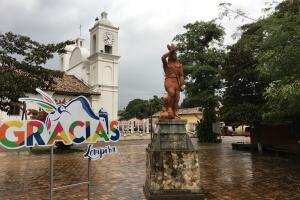
Gracias Lempira (ENG).JPG
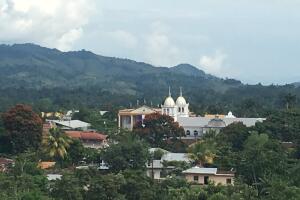
The central park of Gracias, Lempira, shows its indigenous history and the Spanish colonial era.
David Adams/Univision
PHOTOS/Daysi Iglesias1.JPG
Daysi Iglesias sells 'ticusos' a corn dough with beans as well as fruit juices, in the central square of Gracias, Honduras. "Yes, I know that the president's brother is in jail, but only they know what they've been up to. I've no idea. We just stick to our work."
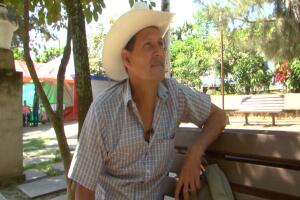
PHOTOS/Domingo Gutierrez.jpg
Gracias coffee grower, Domingo Gutierrez, 58, seated in the central square. Coffee prices have fallen and he struggles to make a living off his eight acres.
PHOTOS/Casa del presidente en Gracias.jpg
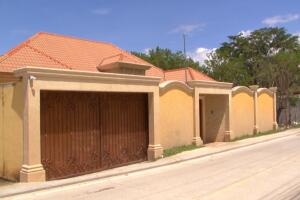
PHOTOS/Cubate house.jpg
The house of former Gracias deputy mayor, Mario Jose Calix, who was indicted in January with New York and U.S. officials have requested the extradition of Calix, though his whereabouts are unknown. Univision visited his home in Gracias and spoke to his mother who said she hasn't seen her son son "in ages."
Marvin Valladares/Univision
PHOTOS/casa en construccion en Gracias.jpg
On the outskirts of Gracias, several modern, luxury residences are under construction that stand out in sharp contrast to the traditional, modest single-story homes in the town.
Marvin Valladares/Univision
Gracias municipality.png
The municipality of Gracias has 55,000 inhabitants, of which 22,000 live in the town and has an annual budget of approximately $ 2 million, according to the mayor.
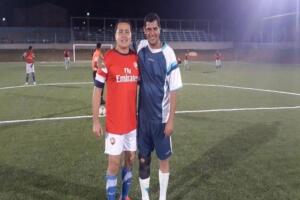
Tony Hernandez and football.jpg
En Gracias, Tony Hernández es recordado como un típico ganadero que fue elegido para el congreso en 2013, así como un apasionado jugador de fútbol.
Municipio de Gracias, Lempira/Facebook
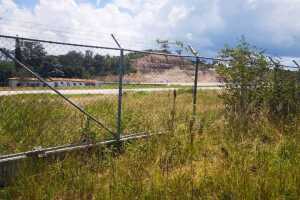
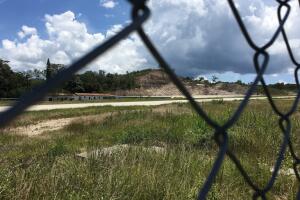
PHOTOS/Gracias airport.jpg
In April 2016 the government inaugurated a small, local airport on the outskirts of town as part of a national tourist plan to link major cities with the nearby famous ancient Mayan ruins of Copan. But the tourists never came.
David Adams/Univision
PHOTOS/Gracias airport2.JPG
The Gracias airport runway is now used almost exclusively by president Hernandez who visits at weekends. Residents also talk in hushed tones of suspicious planes landing in the dead of night bringing cocaine from Colombia, and the eastern Atlantic coast of Honduras.
David Adams/Univision
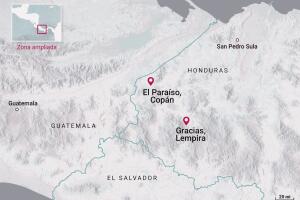
PHOTOS/Map of Honduras.jpg
Western Honduras is a remote border area with Guatemala and El Salvador.
Mauricio Rodriguez-Pons/Univision
PHOTOS/El Paraiso.JPG
El Paraiso, Honduras, is nestled into the mountains of northwest Honduras just a few miles from the border with Guatemala. Draf traffickers took advantage of its strategic location to smuggle cocaine across the border.
David Adams/Univision
PHOTOS/El Paraiso municipality.jpg
Mayor Alexander Ardon built a splendid new municipal building with a portico with columns that became famous in the Honduran media. But local residents say he did good things for the town, providing basic services they didn't have before.
Claudia Mendoza/Univision
PHOTOS/El Paraiso iglesia.jpg
Even if some of the public works in El Paraiso may have been paid for with drug money, residents said they were grateful. When killings took place they were mostly between the drug traffickers. they added.
Claudia Mendoza/Univision
PHOTOS/El Paraiso streets.jpg
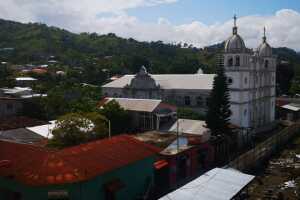
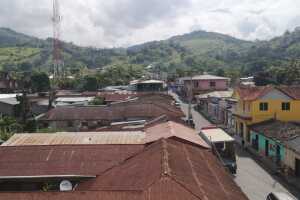
El Paraiso is a quiet town located in the province of Copan, in northwest Honduras. It became notorious in recent years as a haven for drug traffickers seeking to transport cocaine into Guatemala en route to the United States.
Cludia Mendoza/Univison
PHOTOS/El Paraiso iglesia y parque.jpg
Across from the El Paraiso town hall, a new park is being built wiht miunicpal funds, complete with a replica of a Mayan temple. The town in close to the famous Mayan ruins of Copan, one of the country's main tourist attractions.
Claudia Mendoza/Univision
PHOTOS/Adonias Morales.JPG
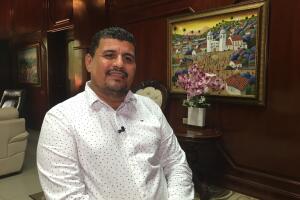
Adonias Morales, 53, mayor of El Paraíso in his office. His close friend and former mayor, Alexander Ardon, turned himself in to the DEA in February and is expected to testify against Tony Hernandez, brother of the Honduran president, who goes to trial in New York on October 2, accused of being "a violent multi-ton drug trafficker."
David Adams/Univision
Marvin.JPG
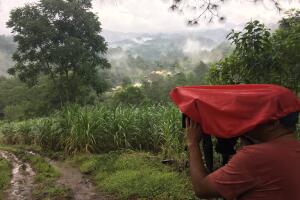
Univision cameraman, Marvin Valladares, captures images of hillsides cloaked in mist in western Honduras.
David Adams/Univision